7 Habits of a Successful Student: Transform Your Grades and Life in 2026
Imagine a 16-year-old high schooler from Chicago, buried under failing grades, endless TikTok scrolls, and soccer practice, feeling like college was a distant dream.
Then, they discovered the 7 habits of a successful student and turned it all around, boosting their GPA from 2.1 to 3.9 in one semester.
Table of Contents

For busy US students aged 13-28 juggling AP classes, part-time jobs, and social lives, these habits are game-changers. They’re not fluffy advice; they’re proven strategies from top performers to conquer stress and excel.
In this post, we’ll break down the 7 habits of a successful student:
Habit 1: Be Proactive
Successful students don’t wait for teachers to remind them or blame bad luck for poor grades they take charge of their learning.
Being proactive means owning your choices, like deciding to study ahead instead of cramming last-minute.
Here are quick tips to start:
- Set one personal goal each week, such as “Finish math homework by Tuesday.”
- Check syllabi early to anticipate deadlines and break big projects into daily steps.
- Track your progress in a simple app or notebook to stay accountable.
Take Sarah, a high schooler in California drowning in AP Biology notes. She started reviewing them daily for 20 minutes, rather than waiting for tests.
Result? She aced her finals and gained confidence for college apps. You can do this too start small today!
Habit 2: Begin with the End in Mind
Top students visualize their long-term goals like getting into a dream college or landing that first job to guide every daily decision.
This habit keeps you focused, turning vague dreams into actionable steps amid busy schedules.
Try these simple ideas:
- Create a vision board with photos of your target university, dream career, or post-grad life pin it above your desk.
- Write a “future self” letter detailing where you’ll be in 5 years and what habits got you there; read it weekly.

For US students tackling SAT prep or AP classes, this gives a competitive edge suddenly, every study session fuels that Ivy League acceptance.
Start today: Spend 10 minutes defining one big goal and reverse engineer your first step.
Quick Exercise: Define Your Goals
Tailored for students aged 13-28, use this simple 3-step SMART goal template (Specific, Measurable, Timed) to turn dreams into reality. Grab a notebook and spend 5 minutes now.
- Specific: What exactly do you want? (e.g., “Ace my SAT math section” instead of “do better on tests.”)
- Measurable: How will you track success? (e.g., “Score 700+ on practice tests.”)
- Timed: Set a deadline. (e.g., “By March 15, before official registration.”)
Example: “I will complete 3 AP History chapters (specific), with 90% quiz accuracy (measurable), every week until finals on May 20 (timed).”
Apply it: Write your goal below and revisit weekly watch motivation soar!
Habit 3: Put First Things First
Successful students master their schedules by prioritizing high-impact tasks first, using tools like the Eisenhower Matrix (urgent vs. important) or a basic planner app.
They say no to distractions think endless Instagram scrolling or binge watching to protect study time.
Quick tips:
- Block your calendar for “big rocks” like homework before small stuff.
- Use the 2-minute rule: Do tiny tasks immediately to build momentum.
Example: Alex, a college freshman, ditched weekend parties for 2-hour study blocks. He maintained a 3.8 GPA while enjoying guilt-free fun later.
Start by planning tomorrow’s top 3 priorities tonight!
Habit 4: Think Win-Win
Top performers build collaborative mindsets, aiming for mutual success in group projects and friendships instead of cutthroat competition.
They celebrate others’ wins and seek arrangements where everyone benefits, like fair task splits in study groups.
Actionable tips:
- Praise a classmate’s strong grade publicly to foster positivity.
- Propose “win-win” trades, e.g., “I’ll handle research if you cover presentation.”

In American school culture, this shines in team sports or debate clubs where thriving together beats solo glory.
Try it: Next group project, suggest a benefit for all and watch teamwork elevate everyone’s grades!
Habit 5: Seek First to Understand, Then to Be Understood
Successful students excel by listening actively in class and with peers, grasping concepts fully before sharing their own thoughts.
Practice paraphrasing: After a teacher explains a topic, restate it in your words “So, you’re saying X because Y?” to confirm understanding.
This reduces misunderstandings in diverse US classrooms, where accents, backgrounds, and styles vary.
Result? Better notes, fewer questions later, and stronger relationships. Try it next lecture: Listen fully, paraphrase once, and notice how comprehension skyrockets.
Habit 6: Synergize
Teamwork supercharges results when students combine unique strengths, like forming study pods where one excels in math and another in writing.
Friends from different schools share notes via apps like Notion or Discord, covering twice the material in half the time.
For remote learners, virtual synergy via Zoom groups keeps everyone connected.
The power? 1+1=11 ideas multiply. Action: Message two classmates today to start a weekly pod and tackle that group assignment faster.
Habit 7: Sharpen the Saw
High achievers renew themselves across four areas physical (7-9 hours sleep, 30-min workouts), mental (reading, puzzles), social (calling friends), and spiritual (mindfulness apps like Calm or journaling).
Skip this, and burnout hits hard in US high schools and colleges with relentless pressure.

Balance prevents crashing: Exercise clears your mind for studying, hobbies recharge creativity.
Quick start: Tonight, swap 30 scroll minutes for a walk or meditation feel sharper tomorrow!
Daily Routine Checklist
Integrate the 7 habits of a successful student into your day with this scannable sample schedule for a typical US high school or college student. Check off as you go!
| Time | Activity | Habit(s) Used |
|---|---|---|
| 6:30 AM | Wake up, 10-min meditation + goal review | #2 (End in Mind), #7 (Sharpen Saw) |
| 7:00 AM | Quick workout or stretch | #7 (Sharpen Saw – Physical) |
| 7:30 AM | Breakfast + plan top 3 priorities | #1 (Proactive), #3 (First Things) |
| 8:00 AM – 3:00 PM | School: Listen actively, paraphrase notes | #5 (Understand First) |
| 3:30 PM | 20-min note review, no phone | #1 (Proactive) |
| 4:00 PM | Study block #1 (e.g., AP/SAT prep) | #3 (First Things), #2 (End in Mind) |
| 5:30 PM | Study pod call or group project | #4 (Win-Win), #6 (Synergize) |
| 7:00 PM | Dinner + celebrate a friend’s win | #4 (Win-Win), #7 (Sharpen Saw – Social) |
| 8:00 PM | Study block #2 + 2-min tasks | #3 (First Things), #1 (Proactive) |
| 9:30 PM | Wind down: Journal or hobby | #7 (Sharpen Saw – Mental/Spiritual) |
| 10:00 PM | Lights out (7-9 hrs sleep) | #7 (Sharpen Saw – Physical) |
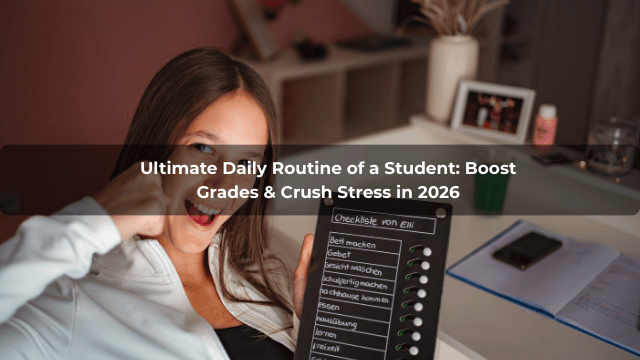
Pro Tip: Customize for your schedule track for one week and adjust. Read more in my other post: ” Ultimate Daily Routine of a Student: Boost Grades & Crush Stress in 2026″.
Conclusion
Mastering the 7 habits of a successful student isn’t just about better grades , it’s your ticket to unbreakable confidence, less stress, and doors opening to top colleges, scholarships, and dream careers.
You’ve got the roadmap: Be proactive, start with goals in mind, prioritize ruthlessly, think win-win, listen first, synergize with others, and sharpen your saw daily.
US students aged 13-28 who live these habits dominate AP classes, SATs, and beyond.
Pick one habit to crush starting today maybe a 20-minute note review or vision board. Small wins build empires!
FAQ
How long does it take to see results from these habits?
Most students notice improvements in 2-4 weeks with consistency, like higher quiz scores or less stress.
Can these habits help with SAT or AP classes?
Absolutely prioritizing (Habit 3) and proactive reviewing (Habit 1) align perfectly with intense prep
What if I fall off track?
No big deal , Habit 7 (Sharpen the Saw) includes self-renewal to bounce back. Restart with a quick goal review (Habit 2) and one small win.
Are these habits only for high schoolers?
No, they’re ideal for ages 13-28, from middle school to college. College freshmen prioritize study blocks (Habit 3) over parties, while younger teens build basics like active listening (Habit 5).