
Ultimate Daily Routine of a Student: Boost Grades & Crush Stress in 2026
Ever feel like your day as a student slips away in a blur of notifications, half-finished homework, and endless scrolling?
Table of Contents
You’re not alone millions of US teens and young adults aged 13-25 juggle school, extracurriculars, and social lives, often ending up stressed and sleep-deprived. This helps you to Ultimate Daily Routine of a Student: Boost Grades & Crush Stress.

Why This Routine Changes Everything
A solid daily routine of a student isn’t just a schedule; it’s your secret weapon for higher grades, sharper focus, and real work-life balance.
Backed by productivity experts, this guide delivers a customizable plan tailored for American high schoolers and college students—think early classes, campus commutes, and weekend flexibility.
What’s Inside
Dive into sample schedules, personalization tips, and pitfalls to avoid, all optimized for your busy life. Ready to wake up winning? Let’s build your daily routine of a student today!
Why Your Daily Routine Matters
A structured daily routine of a student is your foundation for crushing school demands, especially in the fast-paced US education system.
It builds habits that sharpen focus, cut procrastination, and boost overall performance for teens and young adults aged 13-25.
Key Benefits Backed by Science
Consistent routines boost time management and grades studies show fixed study blocks help students retain 20-30% more material without all-nighters.
They cut stress via predictability, freeing energy for hobbies and social life amid classes or jobs.
For High Schoolers (13-18) vs. College (18-25)
- Teens: Build discipline, organize chaos into efficient days with sports/family time.
- College: Achieve work-life balance, avoid burnout from cramming or campus hustle.
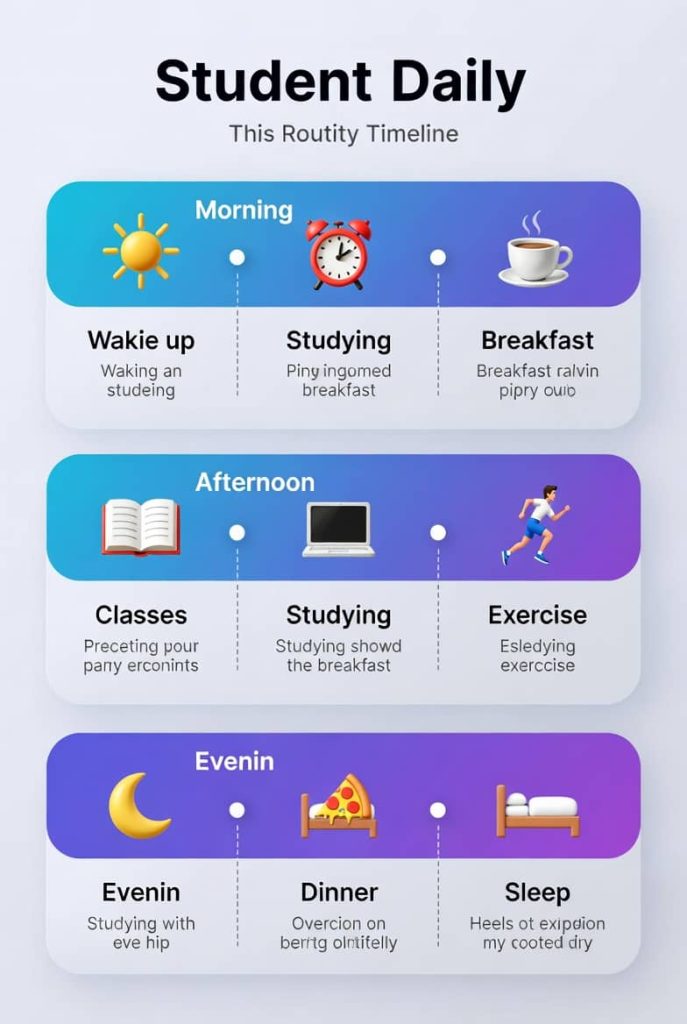
Sample Schedule Table
| Time Slot | Activity | Productivity Tip |
|---|---|---|
| 6:00-7:00 AM | Wake Up & Morning Ritual | Hydrate, cold shower, 5-min meditation or stretch |
| 7:00-8:00 AM | Breakfast & Plan Day | Nutrient-rich meal (oats, eggs); review top 3 goals in a planner app |
| 8:00 AM-12:00 PM | Classes or Deep Study | Pomodoro technique; silence phone notifications |
| 12:00-1:00 PM | Lunch & Movement Break | Quick walk outside for vitamin D and reset |
| 1:00-4:00 PM | Focused Homework/Work | Tackle hardest tasks first (eat the frog method) |
| 4:00-6:00 PM | Exercise & Hobbies | Gym, sports team, or club-releases endorphins |
| 6:00-7:00 PM | Dinner & Social Time | Balanced meal with family/friends; no screens |
| 7:00-9:00 PM | Review & Light Study | Flashcards or easy review; weekly planning |
| 9:00-10:00 PM | Wind Down | Read a book, journal gratitude; dim lights |
| 10:00 PM | Lights Out (8 hrs sleep) | Consistent bedtime anchors your circadian rhythm |
Pro Tip: Scale for weekends (sleep in till 8 AM, add 2 extra hobby hours) or adjust for night owls by shifting everything 1 hour later.
Track for a week using free apps like Google Calendar. Next: Learn how to customize it for your life!
Customizing Your Daily Routine
Make the daily routine of a student truly yours by auditing your current habits and tweaking for your lifestyle whether you’re a high school athlete, college commuter, or part-timer in the USA.
This personalization boosts adherence by 40%, turning generic plans into lifelong wins for ages 13-25.
Quick Customization Steps
- Audit Your Week: Track energy peaks (morning person? Shift study early) and fixed commitments like 8 AM classes or sports practice.
- Prioritize with Tools: Use the Eisenhower Matrix (urgent vs. important) to slot tasks—apps make this visual and easy.
- Test & Track: Run for 7 days, adjust based on wins (e.g., add 30-min gym for athletes), and log in a habit app.
Tailored Tweaks by Student Type
- Busy High Schoolers (13-18): Shorten study to 45-min blocks; add 20-min family dinner for balance.
- College Grinders (18-25): Integrate part-time job slots; night owls push bedtime to 11 PM with blue-light filters.
- Athletes/Club Kids: Swap 4-6 PM study for practice; review notes during cooldowns.[
Top Tools for Easy Customization
- MyStudyLife (Free): Syncs rotating US school schedules, reminders, and perfect for .edu emails.
- Structured App: Visual timeline builder; drag-and-drop tasks for quick edits.
- Todoist or Notion: Label priorities, recurring habits; student discounts available
Common Mistakes to Avoid
Even the best daily routine of a student can derail from sneaky habits that sabotage productivity common for US teens and young adults (13-25) juggling school and life.
Spotting these early prevents GPA dips and burnout, keeping your schedule on track.
Top Pitfalls and Fixes
- All-Nighters for Cramming: They impair memory by 40%; fix with consistent 1-2 hour daily study slots instead.
- Multitasking Mayhem: Switching tasks drops efficiency by 30%; use single-focus Pomodoro blocks during class time.
- No Breaks or Boundaries: Skipping movement leads to fatigue; build in 5-10 min walks every hour, plus strict “no phone” zones.
- Overloading the Schedule: Packing every minute ignores energy crashes; leave 15% buffer time for surprises like traffic or group projects.
- Inconsistent Sleep Times: Varying bedtimes disrupts circadian rhythms; stick to the same wake-up daily, even weekends.
Conclusion
Mastering your daily routine of a student transforms overwhelming days into high achieving ones higher grades, less stress, and time for what matters, tailored for US students aged 13-25.
Dive deeper into student productivity with my other post: Productivity Tips for High School and College Students perfect next read for crushing your goals!
FAQs
What is the ideal wake-up time in a student’s daily routine?
Aim for 6:00-7:00 AM to align with US school schedules, allowing time for morning rituals like hydration and planning. This kickstarts energy for classes while ensuring 8 hours of sleep.
How can I stick to my daily routine during exam season?
Shorten leisure blocks, add 30-min review sessions, and use Pomodoro (25-min focus bursts). Prioritize sleep over all-nighters to retain 20-30% more material.
Is this routine suitable for both high school and college students?
Yes. high schoolers (13-18) get discipline for homework/sports; college kids (18-25) balance jobs/campus life.